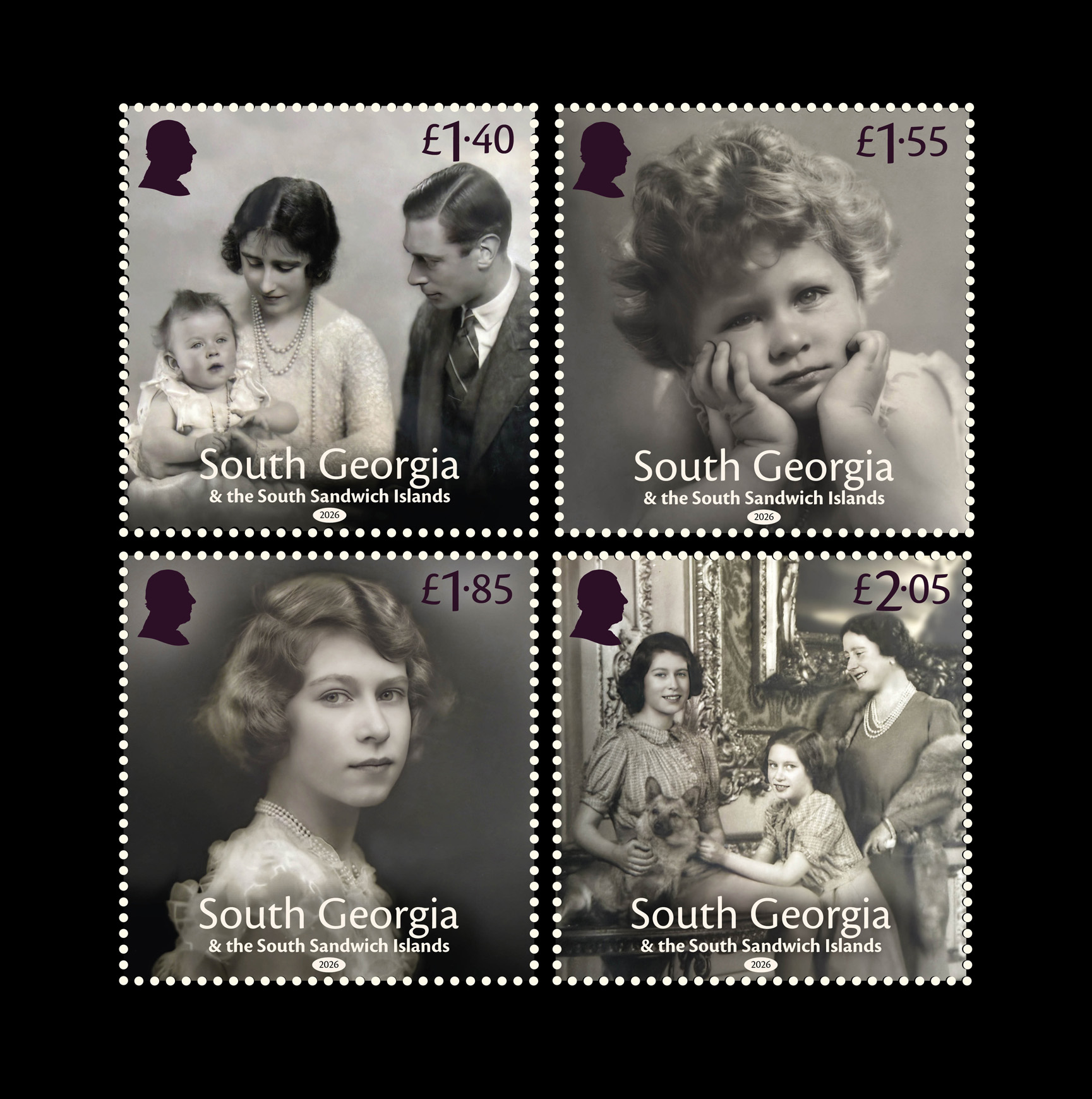
100th Anniversary of the Birth of Queen Elizabeth II Stamp Release
April 21, 2026
The 21st April, 2026 marked the centenary of the birth of Her Late Majesty Queen Elizabeth II and this week the Government of South Georgia & the South Sandwich Islands (GSGSSI) released a stamp set to commemorate this special anniversary.
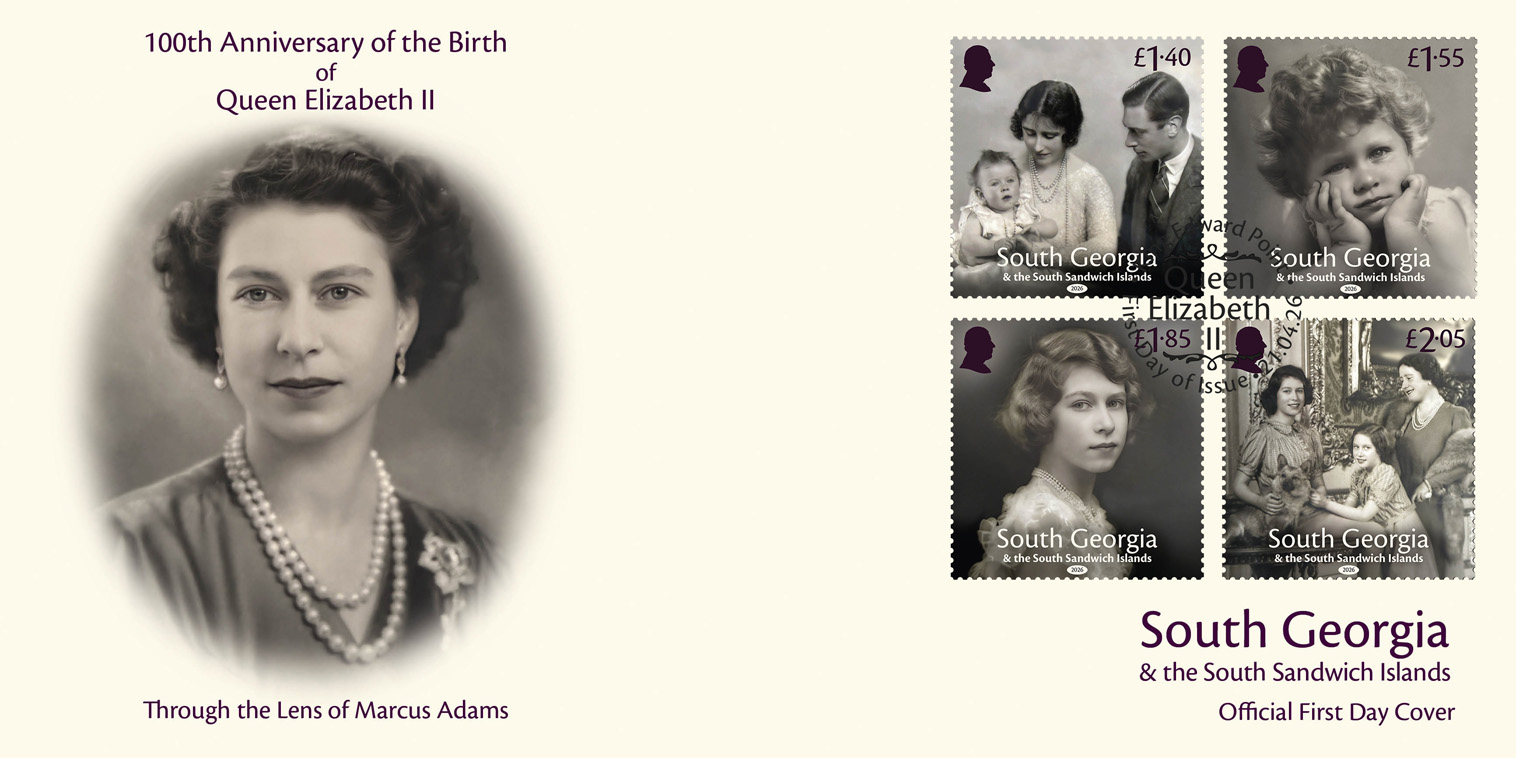
Princess Elizabeth’s early years were shaped by a relatively peaceful and private childhood, spent enjoying time with her horses and dogs and with little expectation of one day becoming sovereign. That changed dramatically in 1936 when the abdication of her uncle, King Edward VIII, led to her father, Prince Albert, becoming King George VI. At just ten years old, Elizabeth became heir presumptive, a moment that reshaped the course of her life.
Following her father’s sudden death in 1952, she ascended the throne and reigned until 2022, becoming Britain’s longestserving monarch. Across seven decades of social, political, and technological transformation, she came to embody stability, continuity, and a deep sense of duty. Her unwavering commitment to public service earned her lasting respect and admiration both at home and across the Commonwealth.
These South Georgia stamps are part of a series (that includes Ascension Island, Bahamas, Falkland Islands and Tristan da Cunha) celebrating the birth of this much loved and respected monarch. All of the portraits are by one of the most influential British photographers of the early twentieth century, Marcus Adams, who is himself best remembered for his intimate and humane portraits of the British Royal Family.
At a time when royal photography was often stiff, formal, and symbolic rather than personal, Adams helped redefine how royalty was seen by the public. His portraits conveyed warmth, informality, and individuality, offering a perspective that felt closer and more relatable than traditional ceremonial imagery. For Adams, photography was not just a recordmaking exercise but an art form capable of revealing personality as well as appearance
Adams’ association with the Royal Family began in the 1920s and grew steadily over several decades. He became particularly known for his photographs of royal children, most notably Princess Elizabeth and Princess Margaret. His portraits of the young Princess Elizabeth, the future Queen Elizabeth II, are among the most enduring images of her early life. Rather than presenting her solely as a future monarch, Adams’ photographs show her as a relaxed and thoughtful child, often smiling gently or gazing calmly at the camera. These images helped make the monarchy more relatable at a time when the United Kingdom was experiencing significant social and political change.
One of the defining characteristics of Marcus Adams’ royal photography was trust. He was granted a level of access that few photographers of the era enjoyed, largely because his subjects felt comfortable in his presence. Adams was known for his gentle manner and patience, particularly with children, allowing him to capture natural expressions rather than forced poses. This ability to put his subjects at ease resulted in photographs that feel remarkably modern, even today.
Technically, Adams was also highly accomplished. He made careful use of soft lighting and uncluttered backgrounds, ensuring that attention remained focused on the subject’s face and expression. His prints were finely crafted, with an emphasis on tonal subtlety and clarity, reflecting both his artistic training and his meticulous working methods. These qualities contributed to the longevity of his work, which remains visually striking nearly a century later.
Marcus Adams’ legacy lies not only in the historical significance of the people he photographed, but in the humanity and sincerity he brought to royal portraiture. His work demonstrated that formality and approachability need not be at odds and helped define the visual language of modern royal photography. Today, his portraits stand as a testament to his artistry and to the longstanding relationship he shared with the Royal Family—particularly the young girl who would later become Queen Elizabeth II.
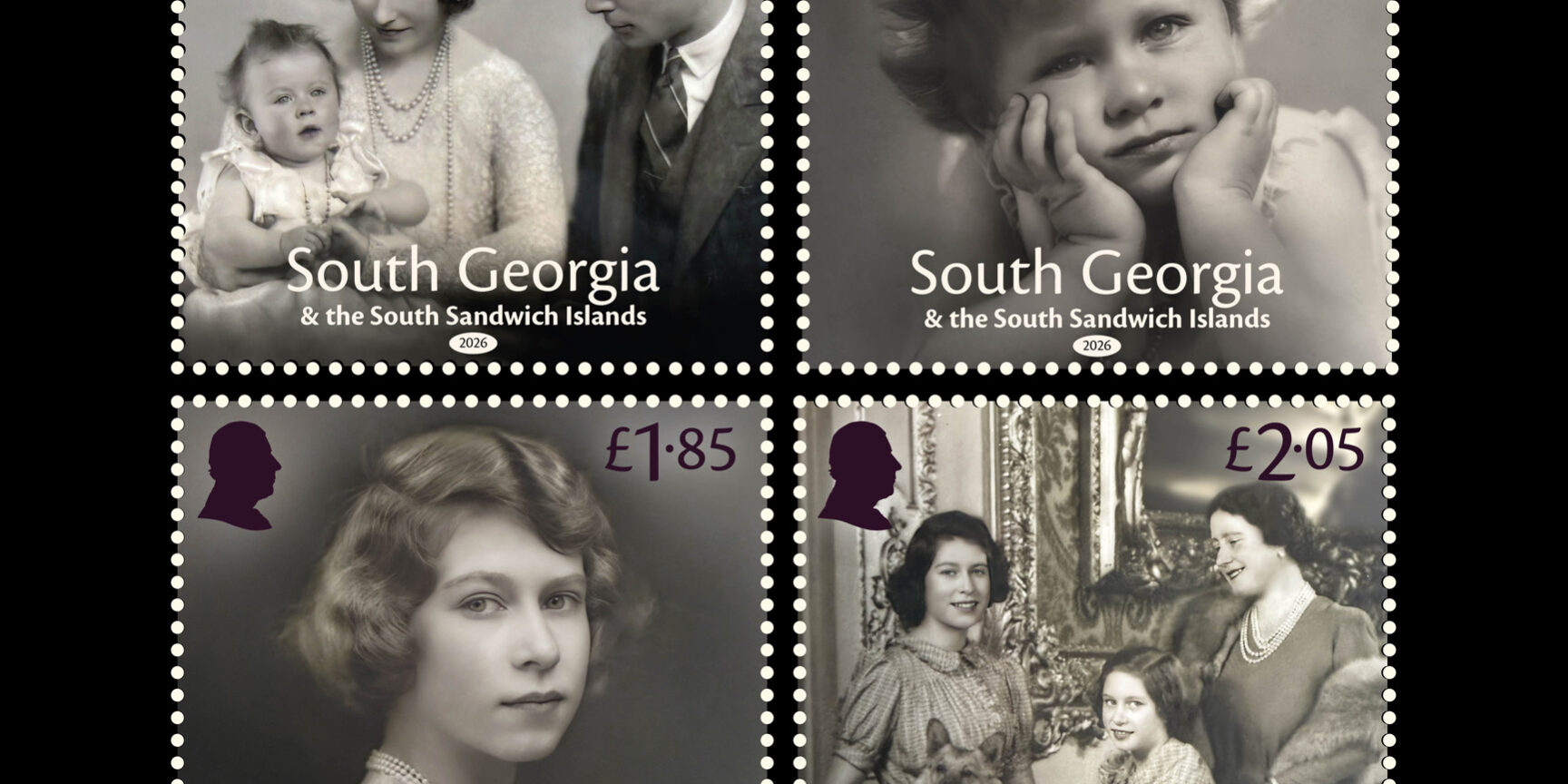
- £1.40 The infant Princess Elizabeth with Elizabeth Bowes-Lyon, later known as the “Queen Mother” and her father King George VI.
- £1.55 Princess Elizabeth as a toddler.
- £1.85 Princess Elizabeth as a young lady.
- £2.05 Princess Elizabeth and her younger sister Princess Margaret with their mother”.
The stamps are available to purchase through www.falklandstamps.com or for trade customers via www.iomstamps.com.